


KATY:
Welcome back to the podcast, everyone. I am so excited because today we have a very special guest, Diana, joining us. Diana and I connected recently, and I just knew she had a story that would really resonate with you all. So first of all, Diana, thank you so much for being here.
DIANA:
Thanks for having me, Katy. I’m really excited to be here and to share my journey.
KATY:
Yes! I’d love to start by letting you introduce yourself. Can you tell us a little bit about who you are and what brought you into this conversation today?
DIANA:
Sure. So, in terms of who I am: I’m a retired fitness professional, a mother, a wife of 32 years, a nature lover, and a lover of movement. Essentially, it all boils down to me spending as much time outside as possible.
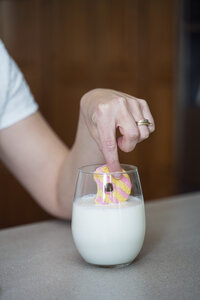
But my relationship with food started young. I grew up in an Italian household, where foods were clearly labeled as “good” and “bad.” The “bad” food was hidden and only given out by my mom when she decided it was appropriate. The cookies, for example, were in a squeaky cupboard so she would know if us kids tried to sneak them.
From early on, it was modeled to me that food had positive and negative qualities. And I was definitely part of the “clean your plate club.” It was seen as disrespectful if you didn’t finish what was provided, since my dad worked so hard for it.
As for body image, I didn’t really think about my body until a comment was made about it. I was probably 10 or 12 when my dad said something pretty cruel about my body and eating at a time he felt was “inappropriate.” That lit the fire for me. It made me start comparing myself to other bodies.
Kids don’t usually think about their bodies when they’re out playing or riding bikes, they think, look what my body can do! But that comment etched shame into my psyche, and I still remember the feeling. Through therapy and working with intuitive eating, I’ve come to see that it wasn’t really about me. It reflected more of his own struggles and his childhood.
KATY:
Yes, it’s amazing how one small comment can etch into your memory and shape your relationship with your body.
DIANA:
Exactly. And even though I didn’t initially connect my mom’s dieting to myself, it still left an impression. She was always limiting food in some way. My siblings were very affected, they’ve dieted on and off their whole lives.
As for my own first diet, I think I was about 19 in college. I went to my physician and said I wanted to be smaller. Looking back, I can’t imagine why the physician gave me what was essentially speed, but they did. I remember feeling so energetic, with no appetite. I could go through a whole day on just a bagel. It was probably a three-month supply of the medication, and when it ended, that was it. But that was my first conscious diet, restricting food with the goal of making myself smaller.
And from there, dieting was nonstop.
KATY:
Wow. And what ultimately led you to intuitive eating?
DIANA:
My last diet lasted about four and a half years, not consistently losing, but constantly fighting the scale. Then in June of 2024, I hit a wall. My husband was diagnosed with a terminal illness, and we were spending hours in hospitals. At first, I was still trying to track my macros, even late at night, planning food for the next day, packing meals. It became too much.
My husband saw the stress I was under, his illness, my emotions, and then obsessing over food. Eventually, I had to stop. I started trying to be “mindful” with eating, but still secretly micromanaging. Then one day while cooking dinner in the fall of 2024, I searched for podcasts about getting out of diet culture. I stumbled on yours, Katy, and within 20 or 30 minutes it hit me, this was the truth. I realized how much of a sham diet culture is. It felt like a loving smack across the head: This is what I need to move forward.
KATY:
And it sounds like you were ready to hear it.
DIANA:
Completely. It was sheer exhaustion. My total conscious time, meaning how much of the day I was thinking about food, was literally 24/7. Before I even opened my eyes in the morning, my first thought was, what am I allowed to eat for breakfast? It was insane how much time and energy went into food thoughts.
KATY:
Right. For many people, total conscious time around food is 90 to 100 percent of the day, sometimes more, they even dream about it. Whereas a normal amount is more like 15 to 20 percent.
DIANA:
Exactly. And when you add the pressures of daily life on top of that, kids, work, my husband’s illness, it was like water seeping into every crack. That’s what diet culture felt like.
KATY:
So true. Okay, so you found the podcast, had that “aha moment,” and started exploring intuitive eating. What were those early days like for you?
DIANA:
The hardest part was understanding my hunger cues. I didn’t know what hunger really felt like. I was either starving from restriction or overeating when I had “free” days. So learning to tune in, asking, Am I hungry? Am I full? What do I actually want? was totally new.
And the wildest part was realizing I could ask myself what do I want? Not, what am I allowed? But, what will satisfy me? That was so empowering.
KATY:
Yes, and a lot of people fear that if they let themselves eat what they want, they’ll only ever want cookies and chips forever. But that’s really just the effect of all the deprivation.
DIANA:
Exactly. And I learned that intuitive eating is about much more than food. It seeps into every part of your life. It’s about curiosity, asking yourself why. As a fitness instructor, I always told my students: know your why. And that’s been true with intuitive eating too.
KATY:
That’s such a powerful realization.
KATY:
It’s like, are we lumping exercise into all of this too? And how do we rethink it and bring it back in a different way?
DIANA:
I like the idea of starting small. I’ve always been a mover in my whole life, but I remember in my early twenties, my two sisters and I decided to take a group fitness class together.
Oh my gosh, we had so much fun. We laughed the entire time. It was some kind of silly “BLT” class at the local community center. We weren’t even interested in the exercise part, but the connection, being together, being silly, that was the catalyst to wanting to do more.
And I think that’s the thing: sometimes it’s not about the exercise itself but about joy and connection.
Another layer for me is ADHD, and I know a lot of people listening may relate. ADHD can stop you from trying things because your brain tells you: You’re not good enough. You don’t look the part. You’re not the right size. You don’t have the right outfit. So many reasons why you “shouldn’t” do something new, exercise included.
My advice is: do it anyway. Give yourself permission to leave anytime you want if it feels uncomfortable. Give yourself permission to stay in your body without comparing to everyone else. Then decide afterward if it’s the right space for you. It can feel scary to try something new, but it’s worth it.
And if you have the luxury of bringing a friend, even better. Whatever it is, do something you’ve always wanted to try. Start small. Be consistent.
For years I worked with older adults, and I’d challenge them with “Squat Week.” Every time you get up from your chair, sit back down, then stand again. Do that five times. Look at that, you just did five squats! It’s so simple.
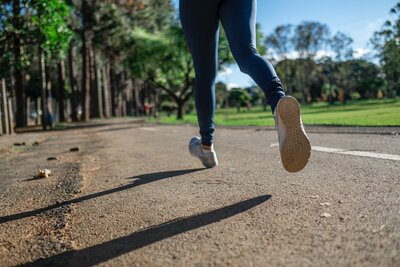
You don’t even have to change clothes or break a sweat. Waiting for your coffee to brew? Do a few wall push-ups or leg lifts. Brushing your teeth? Do some heel raises. These “movement snacks” are powerful. People think it has to be so organized or complicated, but it really doesn’t.
KATY:
I love that. And you once said something to me that stuck, something about giving your body new and novel positions. Can you explain that again?
DIANA:
Yes! Think about how much time we spend sitting at a 90-degree angle, torso to thighs. Our bodies adapt to the shapes we hold most. For example, hip flexors get short and weak if we sit too much.
But what if you change how you sit? Right now, you’re in a chair, and I’m sitting on a bolster on the floor. My legs might be in butterfly position, crossed, or tilted to one side. Those unique positions give my body and joints new information, keeping me strong and mobile.
It allows me to get up and down from the ground more easily because my body is used to it.
I’d tell my students: every time you walk through a doorway, raise your arms and touch the frame. That little stretch tells your body it needs to maintain that range of motion.
If we don’t use it, we lose it. That’s why some older adults shuffle when they walk, they’ve lost that ability to lift and extend. Motion really is lotion.
KATY:
Yes! And it’s counterintuitive, but even with joint pain, the solution is often movement and strengthening, not avoiding it.
DIANA:
Exactly. Pain is relative, but there’s a big difference between discomfort and true pain. Sharp, shooting, breath-stealing pain? That’s pain. Ongoing arthritis discomfort in my knee or elbow? That’s discomfort.
We can work through discomfort, and it can actually make us stronger. But if something spikes to an 8 out of 10 on the pain scale, that’s too far. Discomfort is okay, pain is not.
People throw the word “pain” around loosely, but really, it’s often just discomfort. Learning to distinguish the two is empowering.
KATY:
That’s such a powerful parallel to intuitive eating too, tuning into what your body is telling you and respecting those signals.
DIANA:
Yes. Absolutely.
KATY:
So, Diana, if there was one key thing you’d want listeners to take from this conversation, whether about movement or your journey, what would it be?
DIANA:
For me, it’s the bigger journey of intuitive eating. I wish I could tell my younger self: stop giving all your love to others and withholding it from yourself.
The cruel things I’ve said to myself about my body, I would never say those things to my husband, my son, or my friends. But I said them to me. I loved everyone else but not myself.
So my advice is: start loving yourself. Start being kinder to yourself. That’s the foundation.
KATY:
Yes. Sometimes people don’t even realize how harsh and critical they’re being until we ask, “Would you ever say that to a friend?”
DIANA:
Exactly. It took me until 57 to finally say: I can’t keep treating my body this way. I can’t keep spending all my energy obsessing about food when the people I love need me. Life is too short.
KATY:
Right, there are owls to see, trails to walk, life to be lived. How sad to get to the end of life and say, “Well, at least I tracked every calorie.”
DIANA:
Exactly. And unfortunately, there are people doing that, even late in life. That’s why sharing these conversations matters, because so many people struggle with this silently.
KATY:
Yes. And it’s so common, even among fitness professionals. But it is possible, no matter your age or stage, to shift your relationship with food and your body.
DIANA:
I honestly feel stronger and healthier now, nine months into intuitive eating, than I did in all my years of dieting, even though I was exercising back then too. Now, I do it because I love it.
And I’m proud of myself. I’m grateful I found your podcast, Katy, and that it led me to NDA. Now I’m redoing the workbook program, and it feels so good.
KATY:
And I think people can learn from your approach too, you really leaned into the training and support. You take notes, you ask questions, you implement. That accelerates progress.
It’s not easy and it never feels as fast as we want, but you’ve moved so much further than you would have by winging it. Kudos to you.
DIANA:
Thank you. There’s no way I could have done this on my own. Yes, I could’ve read a book, but the peer support is what pulled me through.
There were so many days where I was “in the suck,” ready to Google the next diet. But then someone in the group would throw me a life jacket, and I’d be pulled back in.
This community is kind and nonjudgmental. That’s rare on social media, where people can be so cruel. Having this safe space has been a gift.
KATY:
I agree. I don’t have the emotional reserves for unkind corners of the internet.
DIANA:
Exactly.
KATY:
Well, Diana, thank you so much for being here and sharing your story and wisdom. I know listeners will take away so many nuggets from this.
DIANA:
I hope so. Thank you so much for having me, Katy.
Rate, Review & Follow Us!
“I love Katy and Rebuilding Trust With Your Body.” <– If that sounds like you, please consider rating and reviewing my show! This helps me support more people — just like you — who are ready to finally discover peace with their bodies. Click here, scroll to the bottom, tap to rate with five stars, and select “Write a Review.” Then be sure to let me know what you loved most about the episode! Also, make sure to follow the podcast if you haven’t already done so. Follow now.



+ view comments . . .